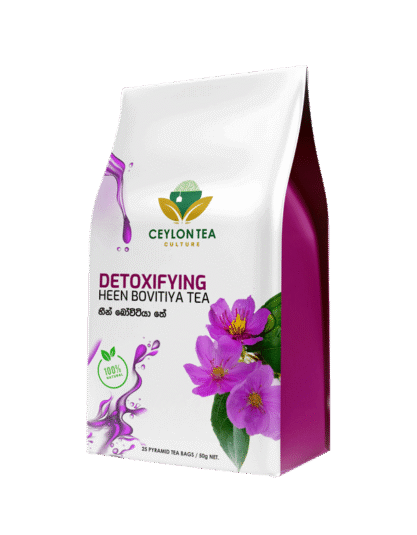
Heen Bowitiya
Osbeckia octandra
A low shrub of the wet zone with small purple flowers. Its dried leaves brew a deep amber cup with a clean, slightly bitter finish.
TraditionallyTaken as a leaf infusion in Sri Lankan homes.

ONE SHIPPING FEE | Only paying one shipping fee when you buy multiple items from multiple places.
Why our tea
Every blend is traceable from the farm group that grew it to the hands that packed it. Here is what stands behind the cup.
Suppliers across Sri Lanka, including farmer groups we established ourselves. We work with traditional growers to improve both the produce and the livelihoods behind it.
Hand-picked and hand-packed in small batches, a process that supports women's employment in our production teams and keeps every blend consistent.
ISO 22000 for food safety, HACCP for hygiene, and GMP for consistent manufacturing. Independently audited, not self-declared.
Our origins
To trace the history of tea, we go back to China — to the first tea leaf that ever touched hot water.
The discovery is bound to Shennong, the legendary Chinese emperor of around 2737 BCE, and to one of the great accidents of ancient Chinese history.
Many tea stories surround him. In one, he had a transparent belly and ate tea leaves to cleanse it — the word for tea is said to come from this, since in Chinese the characters for "tea" and "wipe" share a pronunciation.
In the best-known account, the emperor was resting outdoors with a cup of hot water. He noticed the water had turned fragrant, and found leaves floating on the surface, blown in from a bush nearby.
He tasted it. It was delicious, and it lifted his spirits.Explore more stories
Our herbs
Every blend starts with a plant that grows here. These are the ones our farmer groups pick, dry, and hand-blend for us.
Osbeckia octandra
A low shrub of the wet zone with small purple flowers. Its dried leaves brew a deep amber cup with a clean, slightly bitter finish.
TraditionallyTaken as a leaf infusion in Sri Lankan homes.
Senna auriculata
Bright yellow flowers picked at full bloom. Brews pale gold with a soft, honeyed sweetness and almost no bitterness.
TraditionallyOne of the most widely drunk herbal teas on the island.
Aegle marmelos
The dried flower of the bael tree. Warm and faintly citrus, with a rounded aroma that carries well without milk or sugar.
TraditionallyA household evening tea across the dry zone.
Aerva lanata
A small creeping herb gathered whole. Light and grassy in the cup, with a mild mineral note and a very pale colour.
TraditionallyLong used as a everyday infusion in rural households.
Hemidesmus indicus
A climbing vine used for its root. Distinctly sweet and vanilla-like, the most aromatic herb in our range.
TraditionallyBrewed as a cooling drink in the dry season.
Cardiospermum halicacabum
A slender climbing vine with papery seed pods. Brews light green and herbaceous, clean rather than sweet.
TraditionallyPrepared fresh or dried in home kitchens.
Every herb is sourced from farmer groups across Sri Lanka, hand-picked and hand-packed. Descriptions above cover origin and flavour only.
Shop the rangeSteep scale
Steep time changes herbal tea more than water temperature does. Drag the scale to see where your cup lands.
Our recommendation
Full flavour and still smooth. This is where most of our blends are meant to sit.
Amber, rounded, no harsh edge.
Guidance for loose herbal blends at 95–100°C, one teaspoon per 200ml. Black and green teas need shorter steeps and cooler water.
Shop the rangeWork with us
We supply beyond our own shelf. Whether you need volume, your own label, or distribution rights in your market, we manufacture to order from our facility in Sri Lanka.
Wholesale quantities for retailers, hotels, and cafés looking for premium Ceylon and herbal tea.
Build your own tea brand on our blends and our production line, packed under your name.
MOQ appliesExclusive agency and distribution rights, available locally and in international markets.
Custom-branded, elegantly packaged tea gift sets for clients, staff, and special occasions.
MOQ applies